

Growing Wisdom, Empathy, and Presence Through Story
For years, I practiced social-emotional learning long before I had a name for it. It happened on the couch during read-alouds, in the car after we closed a book and sat quietly with what lingered, and in the subtle ways one child felt deeply seen by a character while another felt unsettled and couldn’t yet explain why. Stories have been doing their quiet work in our home for years, and we're enjoying the fruit of soaking in their goodness.
As a homeschool mom—and now as a graduate student studying social-emotional learning and teacher formation—I’ve come to see this with increasing clarity: literature is one of the most faithful places emotional formation happens. It does its work slowly, relationally, and with beauty. It doesn’t rush children toward conclusions or manage their emotions for them. Instead, it invites them to notice, to wonder, and to grow over time.
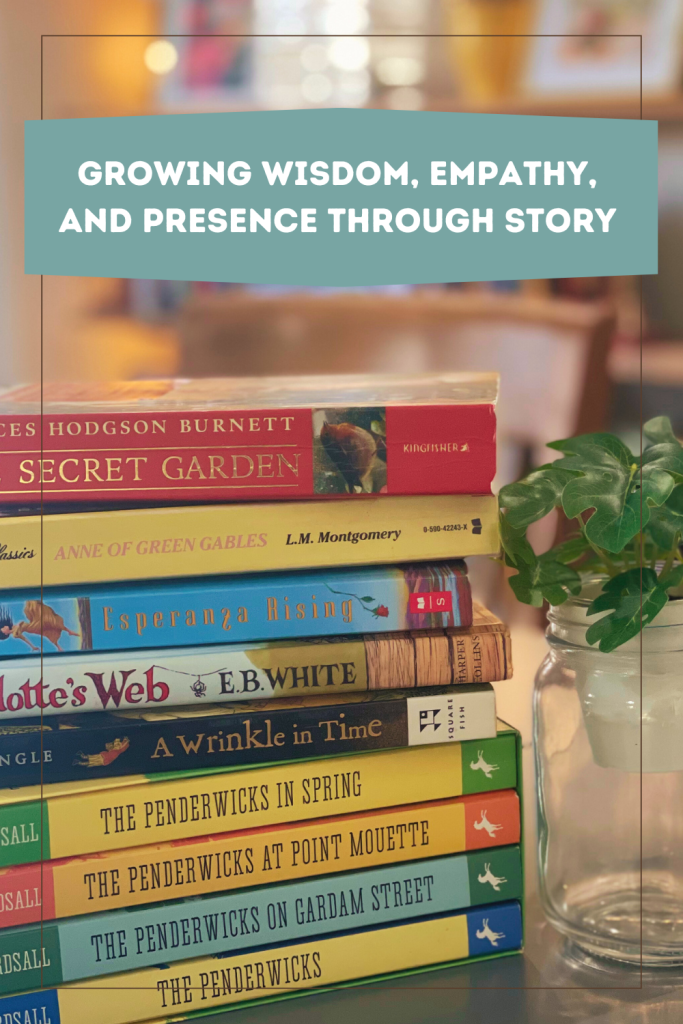
Social Emotional Learning Is Not an Add-On—It Is a Way of Seeing
Social-emotional learning is often described in terms of skills: naming emotions, managing behavior, practicing empathy, making responsible decisions. Those skills matter, but they rarely develop in isolation. In real life, emotional growth happens in context—in relationship, in story, and across time.
That is why literature matters so much. A good book offers children a safe interior space where emotions can be explored without exposure or correction. Through characters, children observe fear, longing, impulsivity, courage, regret, tenderness, and resilience—often before they can name those experiences in themselves. Stories don’t demand emotional maturity on a timeline. They accompany it.
When we reduce SEL to programs or techniques alone, we risk overlooking one of the most natural formation tools we already have. A story does not teach emotions as problems to be fixed. It treats them as part of being human.
What Stories Are Quietly Teaching
When children enter a story, they are doing real emotional work, whether we name it or not. They practice self-awareness by recognizing feelings mirrored in a character’s inner life. Children observe self-management as characters learn—often imperfectly—to pause, to restrain themselves, or to try again after failure. They grow empathy by seeing the world through another’s eyes, especially eyes that differ from their own.
Stories also model relationship skills in a way no lesson ever could. Children watch friendships fracture and mend. They see forgiveness extended, sometimes reluctantly. They learn that love often requires patience and humility. Over time, they develop moral imagination by watching choices unfold across chapters rather than being reduced to instant outcomes.
This is why literature has long been used as a tool for emotional and relational growth. It offers both distance and depth. Children can explore big feelings without being overwhelmed because the story itself holds them.
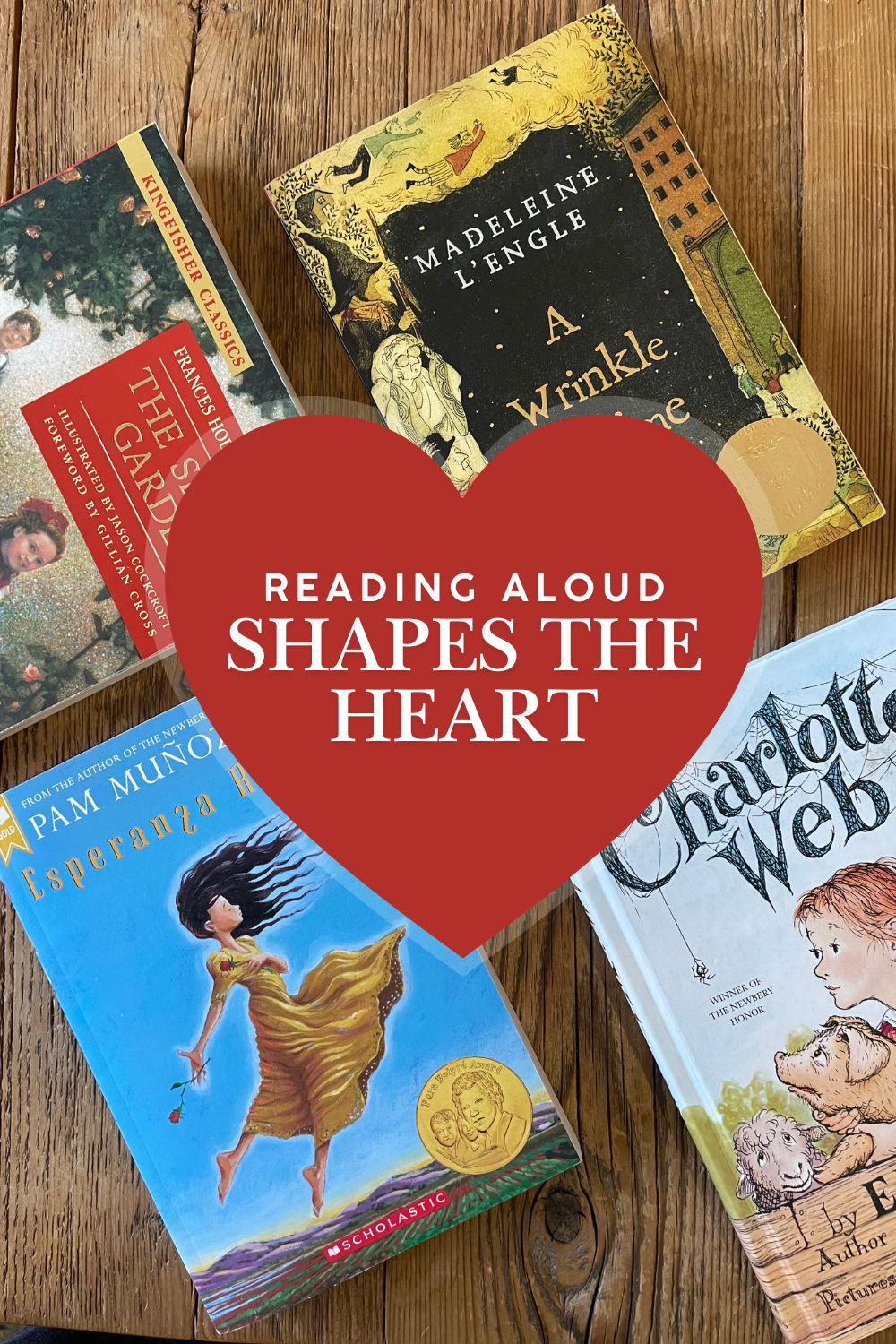
Reading With Attention Rather Than Agenda
Rather than thinking about SEL as something to teach explicitly, I’ve found it far more helpful to ask a different question: What is this story inviting my child to notice? When we read with that posture, we stop trying to extract lessons and instead allow formation to unfold.
With that lens, almost every well-written book becomes a place of social-emotional learning. The competencies we hope children will grow into—self-awareness, empathy, wisdom, responsibility—are already embedded in narrative. They don’t need to be inserted. They need to be encountered.
Stories That Help Children Name the Inner Landscape
Some stories are especially gifted at helping children recognize and name what is happening inside them. Anne of Green Gables is a lasting example. Anne’s imagination, intensity, and longing for belonging give children language for their own interior world. Her emotions are not tidied up or corrected; they are met with relationship. Her growth unfolds slowly, shaped by consequence, care, and love.
Similarly, Because of Winn-Dixie offers a tender exploration of grief, loneliness, and connection, making space for children who carry quiet sadness or unanswered questions. A Wrinkle in Time holds fear, courage, identity, and love together without simplifying any of them, honoring a child’s emotional depth rather than underestimating it.
These stories help children discover that emotions are not something to hide or manage away. They are something to notice, understand, and hold with care.
Learning to Pause, Regulate, and Grow Over Time
Other stories invite children to observe emotional regulation not as instant self-control, but as something learned through experience. Charlotte’s Web quietly teaches patience, gentleness, and faithful presence. Its emotional wisdom is unhurried, showing children that love often looks like steady commitment rather than dramatic action.
In The Moffats, children see impulsivity met with grace and repair, learning that mistakes do not remove them from belonging. The Penderwicks portrays strong emotions held within family rhythms, humor, and reconciliation, modeling emotional safety rather than emotional suppression.
These books teach children that learning to manage emotions is not about perfection. It is about growth supported by relationship.
Seeing and Being Seen: Growing Empathy Through Story
Some of the deepest social-emotional formation happens when children learn to see others clearly. Little Women traces conflict, character formation, forgiveness, and growth within deep relational bonds. Children see that love does not eliminate disagreement—but it does make room for transformation.
Esperanza Rising invites readers into cultural empathy, resilience, and dignity, expanding their understanding of hardship and hope beyond their own experience. The Secret Garden reveals how healing often comes through attentive presence, shared labor, and care for both people and place.
Through these stories, children learn that empathy is not abstract. It is practiced by paying attention.
Stories That Stretch Empathy and Moral Imagination
Some stories do more than invite empathy—they stretch it. They ask children to sit inside experiences that are uncomfortable, unjust, or unresolved, and to stay there long enough for understanding to deepen. These are often the books that shape moral imagination most powerfully, because they refuse to flatten human experience into easy lessons.
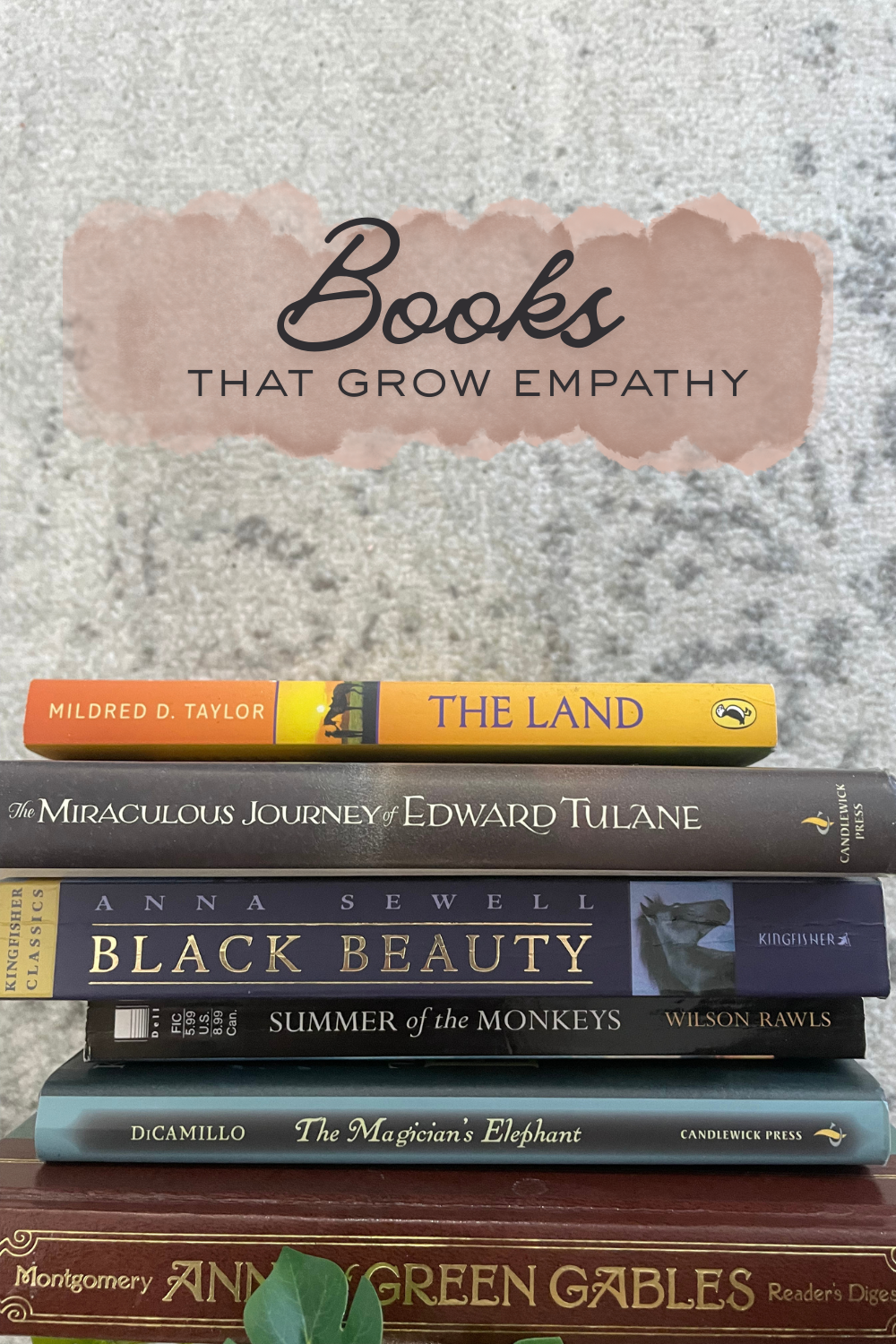
In The Land, children encounter questions of identity, injustice, and belonging through a story that refuses simplification. Paul-Edward’s journey forces readers to grapple with what it means to choose integrity in a world shaped by inequity. The emotional work here is not abstract. It is grounded in lived consequence, teaching social awareness, ethical reasoning, and resilience through narrative rather than explanation. This is SEL that respects a child’s capacity to hold tension and to grow compassion without rushing toward resolution.
Other stories invite children to practice empathy through vulnerability and longing. The Miraculous Journey of Edward Tulane traces love, loss, and the slow awakening of the heart. Edward’s emotional transformation is marked by suffering, silence, and waiting—experiences many children intuitively recognize, even if they lack words for them. This story gently teaches that emotional growth often comes not through control, but through being changed by love and grief. It forms patience, tenderness, and emotional openness in a way no lesson ever could.
Seeing through Radically Different Eyes
Empathy is also cultivated when children learn to see through eyes radically different from their own. Black Beauty does this with quiet power, inviting readers to inhabit the inner life of an animal and, in doing so, to confront cruelty, kindness, and moral responsibility. The emotional formation here is subtle but enduring. Children learn attentiveness, compassion, and the impact of human choices on vulnerable lives. This kind of story trains the heart to notice suffering—and to care.
Some narratives form SEL through loyalty, hope, and moral courage rooted in community. Summer of the Monkeys offers children a world shaped by perseverance, generosity, and belonging. Jay Berry’s determination is not driven by ambition alone, but by love for his family and trust in the goodness of others. The emotional landscape of this story nurtures responsibility, relational commitment, and the quiet strength that comes from hope shared with others.
Finally, The Magician’s Elephant invites children into wonder as a serious emotional posture. Through longing, faith, and the courage to ask difficult questions, the story forms hope that is neither naïve nor forced. Children learn that believing something good might be possible is itself an act of emotional bravery. This is responsible decision-making shaped by imagination and trust rather than certainty.
Together, these stories teach children how to stay present with complexity. They form empathy that is durable, wisdom that is patient, and moral imagination that can hold both beauty and brokenness at once.
Moral Imagination and Choosing the Good Way Forward
Still other stories shape moral imagination without moralizing. The Chronicles of Narnia explores courage, consequence, redemption, and responsibility through wonder rather than lecture. Children are trusted to wrestle with complexity and meaning.
In Holes, justice, inherited stories, and choice are woven together in ways that respect a child’s capacity for nuance. A Single Shard traces perseverance, integrity, and calling with quiet strength, reminding readers that wisdom often grows through faithful, unseen effort.
These stories do not tell children what to think. They invite them to become people who can think—and choose—wisely.
What This Looks Like in a Homeschool Day
In our homeschool, this kind of learning rarely looked formal. It happened through reading aloud long past the early years, when shared stories still offered common ground. It looked like pausing to wonder rather than interrogate, and asking gentle questions when they naturally arose: What do you think she felt here? What would you have done? What changed over time?
Sometimes the conversation came immediately. Sometimes it surfaced days later, unexpectedly, when a child connected a story to real life. Both mattered. Emotional formation does not run on a schedule.
Educating for what lasts
When we read this way, we are not just covering material. We are forming attention, cultivating empathy, practicing wisdom, and educating for the long view. We are raising adults, not just students.
Stories teach children how to live inside themselves and alongside others with patience and care. In a world that often rushes emotional growth or tries to manage it with technique alone, literature remains a faithful companion. It slows us down. It tells the truth gently. And it shapes the heart.
That is education worth tending.
Continue the Conversation in the Rooted Minds Book Nook
If stories have been a formative presence in your home—or if you’re longing to make more room for them—you don’t have to navigate that alone. Inside the Rooted Minds Book Nook, we gather around stories together. You’ll find resources designed to help families read with attention and wonder—not pressure or performance.
The Book Nook exists because we believe stories shape who we are becoming. It’s a place for parents who want to read deeply, notice gently, and cultivate wisdom and empathy through literature—whether you’re reading aloud to young children, sharing novels with teens, or returning to beloved books yourself.
If this post resonated with you, you’ll feel at home there. We’d love to welcome you into that shared space of story, conversation, and growth.

Betsy Strauss is an unexpected homeschooler, mother of three, who is in a relationship with a sweet man for life. She loves reading books, drinking coffee, and learning anything with her kids.