
Educating for the Long View: Raising Adults, Not Just Students
Most parents I know are not looking for perfect systems or flawless outcomes. They are trying to be faithful in the middle of real life. And somewhere along the way, many of us begin to realize that education—however it is structured—is not just about getting children through school. It is about raising adults.
That shift in perspective changes everything.
When we think of education only in terms of students, we tend to focus on short-term markers: grades, benchmarks, completion, success as it can be measured right now. But when we widen the lens and consider the adults our children are becoming, different questions rise to the surface. What kind of people are they becoming? What habits are being formed? What will remain when the structure of school falls away?
These questions often come quietly, long after the day’s work is done. They are rarely about curriculum. They are about formation.
Formation Is Always Happening
Whether we name it or not, formation is taking place every day. Our children are being shaped by rhythms, expectations, conversations, and the unspoken values that guide our homes. They are learning how to respond to difficulty, how to attend to what matters, and how to make sense of the world around them.
So are we.
Education does not happen in a vacuum. It is woven into the life we share with our children. The pace we keep, the way we handle pressure, the stories we tell ourselves about success and failure—these things quietly teach. Long before children can articulate what they believe, they are absorbing what their lives suggest is worth loving.
At some point, many parents begin to feel a tension they can’t quite put into words. We may be doing well by external standards, yet sense that something deeper is at stake. We may be educating efficiently, but are we forming wisely?
The Fragility of Attention in Modern Life
One of the most vulnerable aspects of family life today is attention. What holds it, what scatters it, and what trains it over time shapes far more than we often realize.
We live in a culture that moves quickly and values constant output. Information is abundant. Stimulation is relentless. And in that environment, it becomes easy to mistake busyness for growth and efficiency for wisdom. Children learn early how to perform, how to keep up, and how to manage expectations—but not always how to dwell, wonder, or reflect.
Yet attention is not a neutral thing. What we attend to shapes who we become. The ability to stay with something—to listen deeply, to wrestle honestly, to notice beauty—does not come naturally in a distracted age. It must be cultivated, protected, and practiced over time.
If we are raising adults, not just students, then attention becomes part of the work.
Taking the Long View of Education
Formation rarely announces itself with immediate results. Its fruit is often hidden for years. It shows up later—in how a young adult navigates disappointment, in the courage to tell the truth, in the ability to love what is good even when it is costly.
This long view can feel countercultural in a world that prizes quick outcomes. But raising adults requires patience. It asks us to value faithfulness over visible success and to trust that unseen work matters.
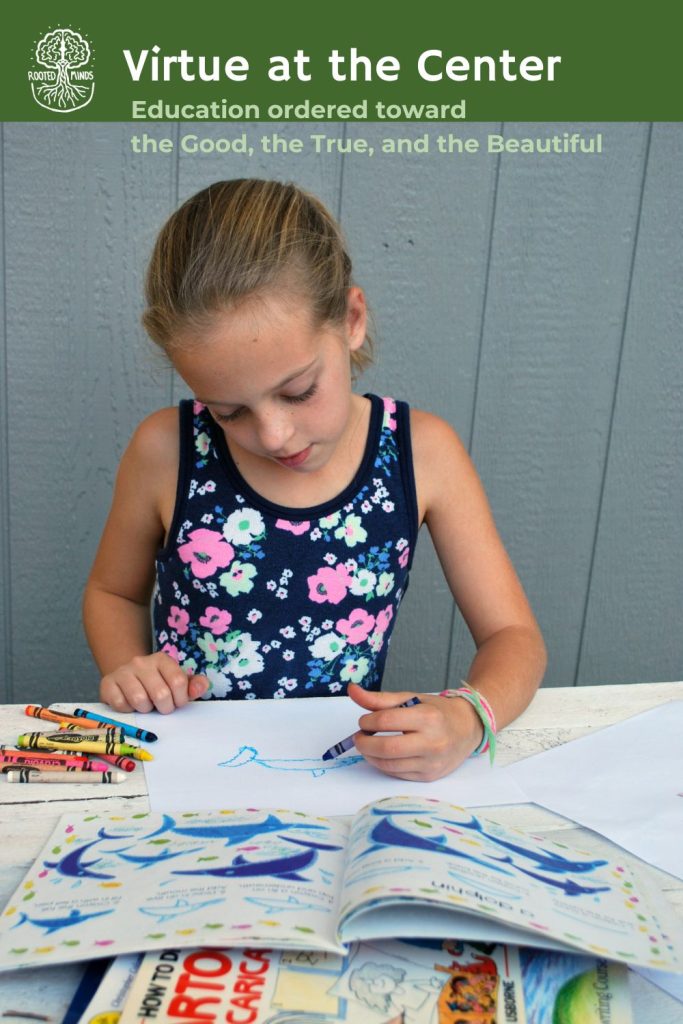
The long game of education is not about producing flawless résumés. It is about cultivating people who can live thoughtfully, love well, and remain rooted when life becomes complex. That kind of formation cannot be rushed, outsourced entirely, or reduced to a checklist.
It happens in ordinary days, repeated choices, and shared life.
When Parents Begin Asking Different Questions
Many parents find themselves drawn toward this long view without knowing exactly how to name it. They sense that education should be doing more than transferring information. They long for learning that shapes character, nurtures wisdom, and makes room for meaning.
Often, what is needed in these moments is not a new program, but language. Language that gives voice to the desire to slow down. Language that honors the intuition that education is as much about who we are becoming as what we are achieving.
These desires are not limited to one educational path. They belong to anyone raising children in a complex world and wondering how best to prepare them—not just for school, but for life.
Beginning the Conversation Before the Conclusions
Some of the most important educational conversations begin before we ever talk about methods. They begin when we acknowledge the weight of formation and allow ourselves to consider the long view.
What does it mean to raise adults who can think clearly, love truth, and live faithfully? What kind of environment supports that kind of becoming? And how might our own lives need to be shaped along the way?
These are not questions with quick answers. But they are questions worth lingering with.
A Space to Linger With These Questions
These are not questions with quick answers. But they are questions worth lingering with.
In the weeks ahead, we’ll be opening space through Rooted Minds for deeper reflection on formation, freedom, and faithfulness—not as a prescription, but as a shared exploration. If these questions resonate, you’re not alone. Many of us are standing at the same threshold, sensing that education is about more than school.
To begin the conversation, we’re hosting a free webinar titled
Why We Homeschool: Formation, Freedom, and Faithfulness—a reflective conversation about taking the long view of education and raising adults, not just students.
For those who want to move more slowly and intentionally, this conversation will continue inside the Rooted Minds membership as a guided mini course. Using the webinar as a starting point, we’ll create space for reflection, journaling, and gentle practices that help these ideas settle into everyday life—not as theory, but as lived formation.
Sometimes the most faithful step is simply to pause, listen, and begin asking better questions. If that feels like where you are right now, we’d love to take the long view together.

Betsy Strauss is an unexpected homeschooler, mother of three, who is in a relationship with a sweet man for life. She loves reading books, drinking coffee, and learning anything with her kids.