
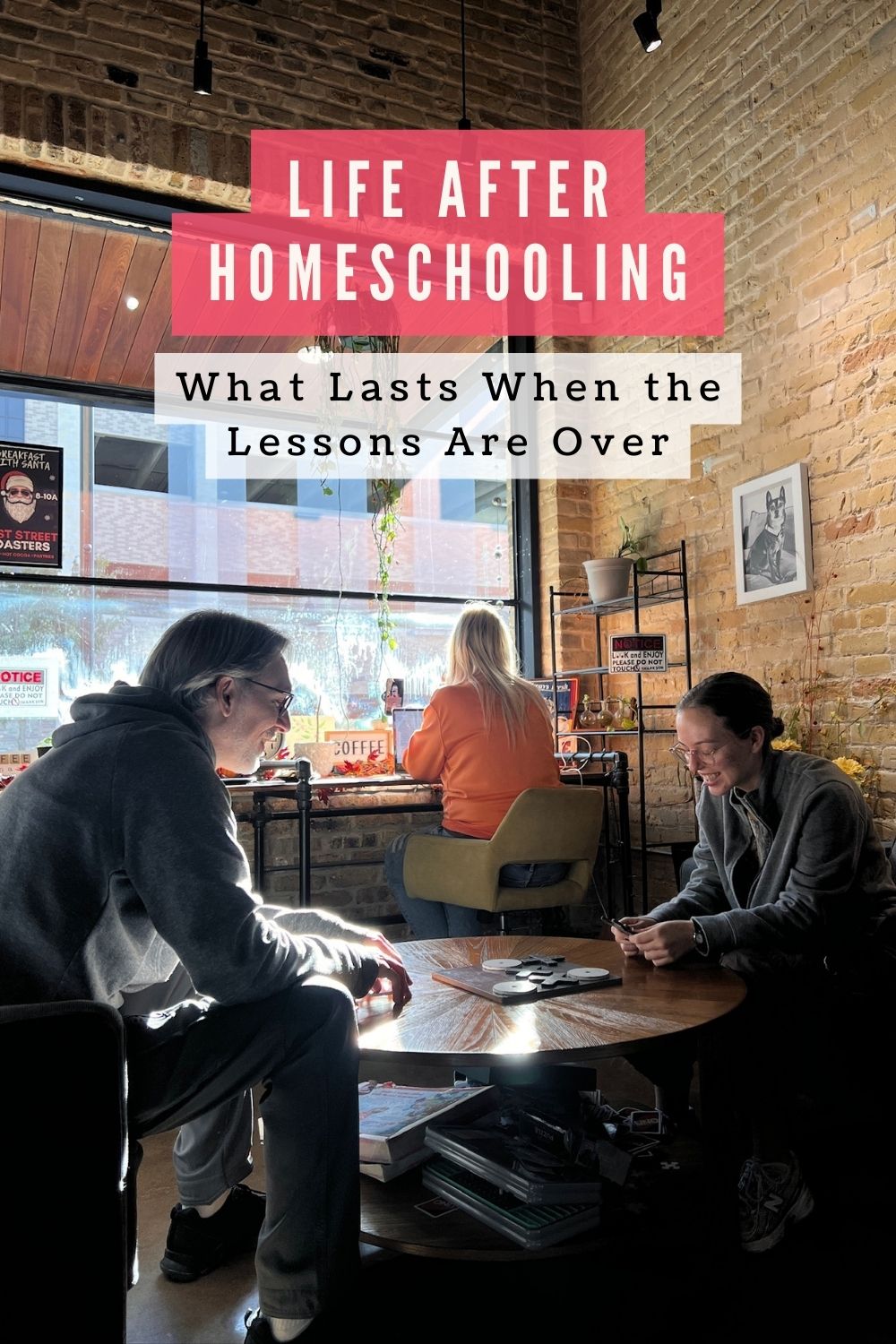
Life After Homeschooling: What Lasts When the Lessons Are Over
Now that I’m on the other side of homeschooling, people keep asking me a question I’m still learning how to answer: How did you do it? It’s a generous question, and one I understand deeply. When you’re in the middle of raising and educating children, you want something you can point to—something concrete, something transferable. A curriculum, a rhythm, a skill that can be named and reproduced.
I hesitate every time because I’m no longer sure that the kind of answer people are hoping for actually exists. Or maybe it exists, but not in the way we tend to imagine when we’re still counting years and checking boxes. Even if I could isolate something and hand it over neatly, I’m not sure it would tell the real story—or that you would want it on its own.
What I Chose—and What I Never Planned
When I look back now, I can see two kinds of shaping forces at work in our family life. There were the things I chose intentionally, and there were the things I never would have planned. Both formed us, often in ways I couldn’t recognize at the time.
I didn’t expect to raise my children in my mother’s house, and at first it felt like something we would need to navigate carefully. Looking back, it was one of the greatest blessings of our family’s life. Living together wove generations into daily proximity, allowing my children to learn care, patience, and presence in ways that no lesson plan could have accomplished.
Things I didn’t expect:
- my daughter to become her Nana’s best physical therapist, learning to read her body and advocate for her care.
- my son to be so deeply connected to Nana’s care toward the end of her life, absorbing lessons about dignity and tenderness simply by showing up.
- my middle daughter to leave art school after one year to attend ministry school instead, bringing all of my adult children back home again in a season when we needed one another more than any of us realized.
None of those moments were planned, and none of them fit neatly into the story I thought we were telling. And yet, they formed us just as deeply as anything we intentionally set out to do.
The Work We Didn’t Know We Were Doing
It’s easy to look back at the homeschooling years and remember only the visible work: the math lessons, the read-alouds, the Latin parsing, the steady rhythm of ordinary days that rarely announce their importance. Those days can feel small when you’re living them, and almost forgettable once they’ve passed.
But with a little distance, I see them differently. Those ordinary days built strength quietly. They trained attention and perseverance. They taught us how to stay with something even when it felt slow, difficult, or unremarkable. It’s not that the curriculum didn’t matter—it did. But what it offered wasn’t just information or outcomes. It offered structure. It gave shape and order to our days so that when life asked more of us than we expected, there was something sturdy already in place to bear the weight.
Faithfulness has a way of doing that. It prepares you for things you can’t yet see.
After the Lessons Are Over
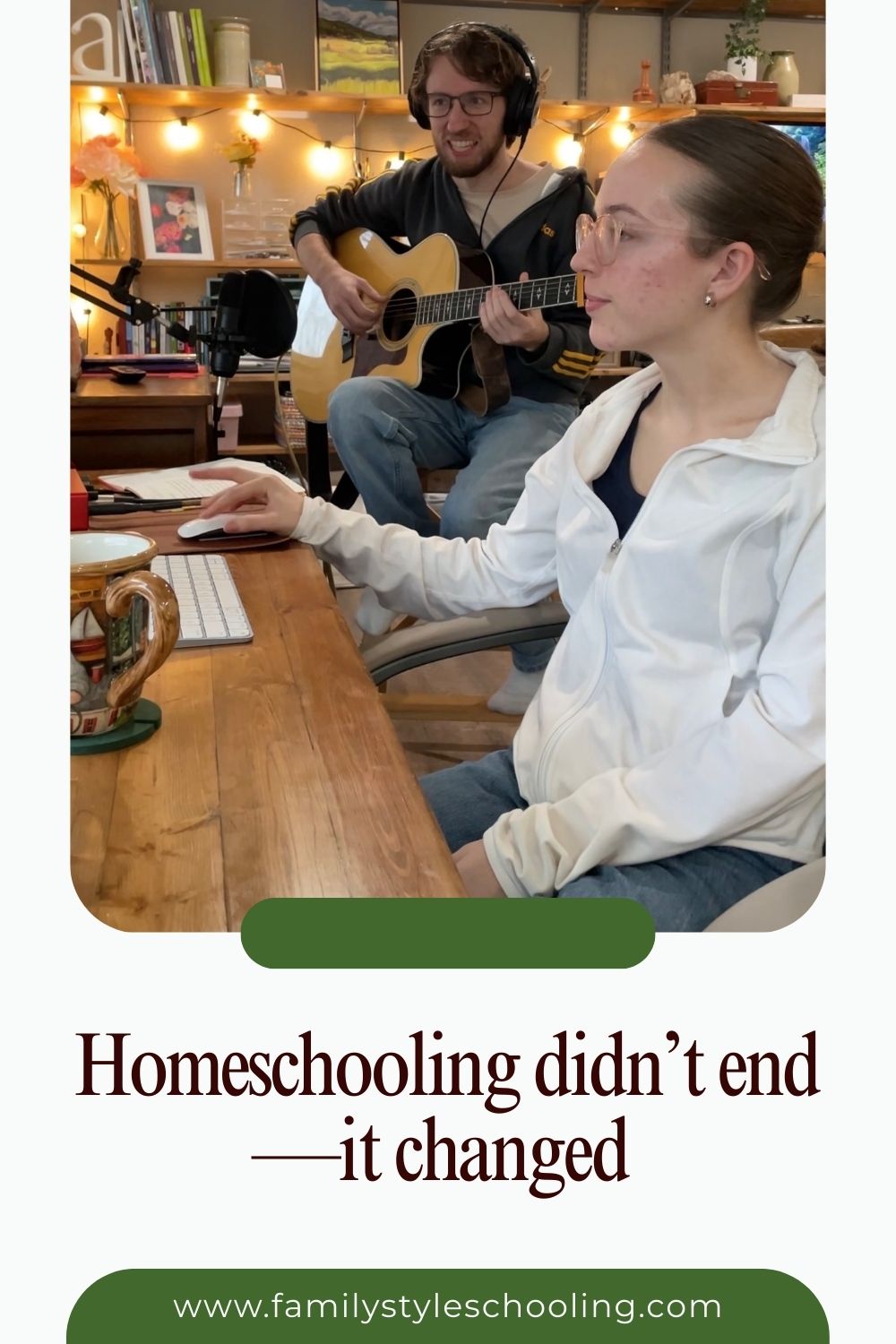
Now the shape of our days looks very different. I get to walk alongside my kids as they write books, paint paintings, record albums, nanny children, serve at church, and tend carefully to their inner lives. The learning didn’t end when the school years did—it simply changed form.
My youngest, who once fought for every word she ever read, recently started her first job outside the home. Four weeks in, her boss called her to offer a promotion. “I know you learn quickly,” he told her. I had to smile. This is the same child for whom learning once felt painfully slow, the one who required layers of patience and time. And now she’s recognized as someone who learns fast, adapts well, and rises to responsibility. The work has borne fruit—and it isn’t finished. She continues to grow, to learn, and to thrive.
What I’m Noticing Now
Standing on this side of the years, I’m beginning to see that formation doesn’t conclude when schooling does. It continues quietly through relationships, responsibility, creativity, service, and the willingness to keep learning long after the structure changes. It continues through community and shared life, often through unplanned moments that ask us to live out what we practiced for years without realizing it.
Maybe the most important work wasn’t something I could have pointed to at the time, or something that could be replicated cleanly. Maybe it was simply a long faithfulness to small things—trusting that, over time, they would become strong enough to hold whatever came next. That’s what I’m noticing now, and it feels like something still unfolding.
A Gentle Reframing for the Ordinary Days
If you’re still in the middle of the school years, this is the part I wish someone had whispered to me more often: what you’re doing may look smaller than it is.
Math is rarely just math
Math, for instance, is rarely just math. It’s learning how to stay with a problem instead of fleeing discomfort. It’s practicing patience, persistence, and humility—the willingness to try again when the first answer doesn’t work. And it’s discovering that understanding often comes after repetition, not before it. Long after the worksheets are gone, that muscle remains.
Reading and writing form attention and empathy
Reading and writing are doing more than building academic skills. They are forming attention and empathy. Reading trains a child to enter someone else’s world and stay there long enough to understand it. Writing teaches them to order their thoughts, to slow down, to notice what they actually mean before they speak. A child who struggles here isn’t failing—they’re being asked to grow inwardly in ways that will matter for a lifetime.
History is an exercise in humility
History is not primarily about dates or timelines, even when it feels that way. It’s an invitation to recognize that people before us wrestled with fear, hope, ambition, faith, and failure just as we do. It quietly teaches discernment, compassion, and restraint. Over time, it forms a sense of humility—an understanding that we are part of a much longer story, not the center of it.
Science trains noticing
Science is less about mastering facts and more about learning how to observe carefully. It cultivates curiosity and teaches children to ask good questions without rushing to answers. It forms respect for order, limits, and mystery. A child who learns to notice patterns in nature is also learning how to be attentive to the world they’ve been given.
Latin slows you down
And Latin—so often questioned for its usefulness—is not really about speaking an ancient language. It’s about submitting to structure. It’s about precision, patience, and the discipline of attending closely to words. Latin trains the mind to slow down, to notice relationships, and to trust that meaning is something you uncover through care, not speed.
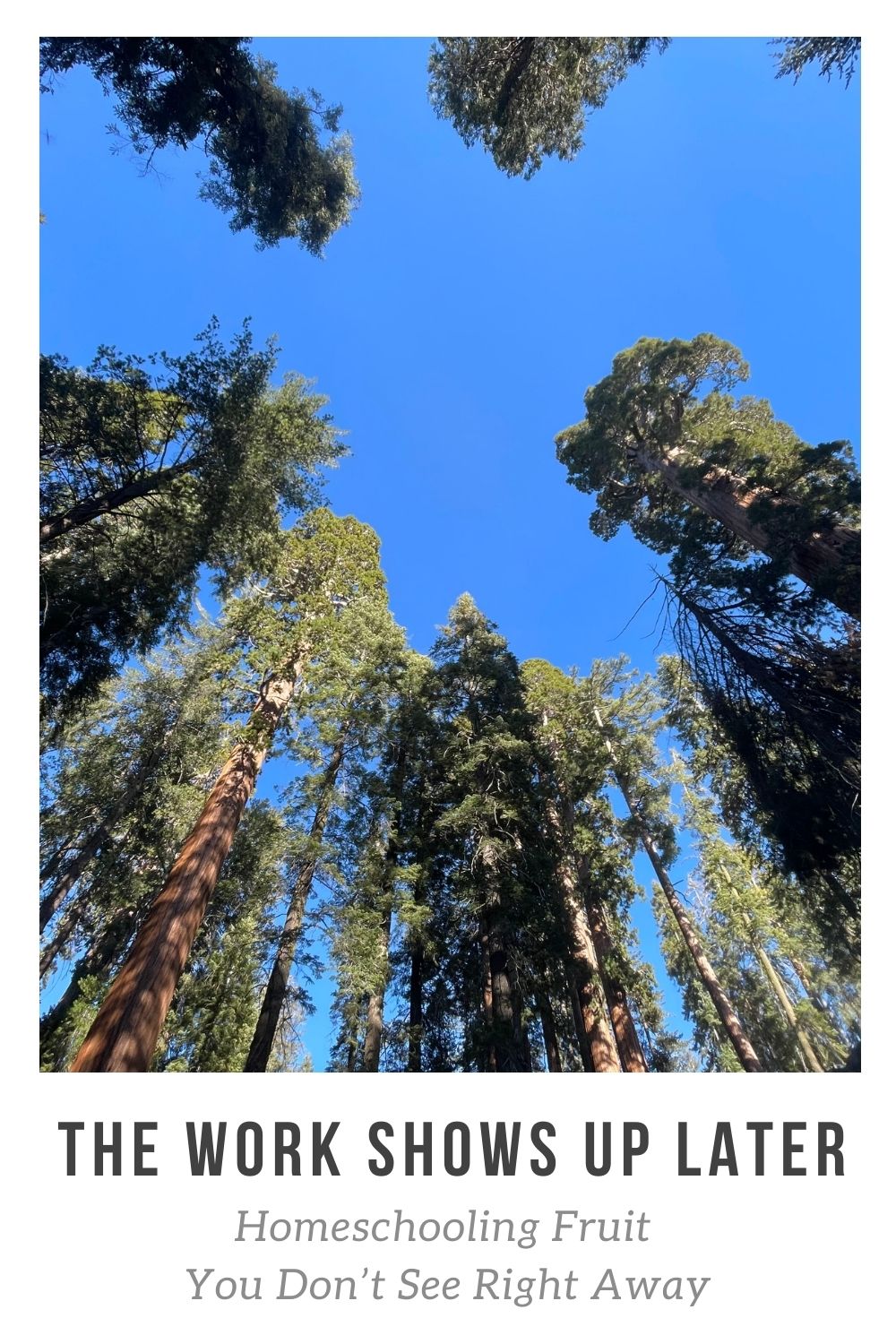
None of these things announce their importance while you’re doing them. They look repetitive. Ordinary. Sometimes frustrating. But together, they create a sturdy interior life—one that can hold complexity, responsibility, creativity, and change.
If you’re tempted to wonder whether the daily faithfulness is worth it, I can tell you this from the other side: it is doing more than you think. The work may not be finished when the school years end—but neither is the fruit. It keeps unfolding, often in ways you couldn’t have planned, and often long after you stop keeping track.
That, at least, is what I’m beginning to notice now.
If You’d Like to Keep Learning Together
If any of this feels familiar—if you’re noticing the quiet work happening in your own home and wondering how to keep tending it—you don’t have to do that alone.
Much of what we’re working on now has grown out of these same questions: how learning forms us over time, how attention shapes love, how faithfulness in ordinary days becomes something sturdy and life-giving. We’re still learning, still asking, still practicing—just in a different season.
If you’d like to keep learning alongside us, we’d love to have you step inside the living room at Rooted Minds. It’s a place for slower conversations, shared wondering, and thoughtful formation—where the porch reflections turn into something we practice together.
No pressure. Just an open door.

Betsy Strauss is an unexpected homeschooler, mother of three, who is in a relationship with a sweet man for life. She loves reading books, drinking coffee, and learning anything with her kids.