

Why Reading Aloud for Character Formation Shapes Moral Imagination
In recent years, many parents—especially thoughtful, attentive ones—have found themselves uneasy with the language of outcomes, benchmarks, and even social-emotional learning. Not because emotions don’t matter, but because something feels off when formation is reduced to skills that can be measured, checked off, or optimized.
If you’ve ever thought, I want my children to be good and wise and loving—not just emotionally competent, you’re not alone.
The good news is this: emotional and moral formation did not begin with modern educational frameworks. For generations, parents and teachers have understood that education is always about shaping who a child is becoming. And one of the most powerful tools for that shaping has always been story.
Formation Is Not a New Idea
Education has never been morally neutral. Every culture, every generation, every school—formal or informal—forms children toward a particular vision of the good life. The question has never been whether formation is happening, but what is doing the forming.
For most of human history, formation happened through shared practices: work, worship, conversation, memory, and story. Children learned courage by hearing about courage. They learned loyalty by watching it embodied. They learned empathy not through lessons about feelings, but through inhabiting the inner worlds of others.
Modern education often prioritizes performance—what can be demonstrated, tested, and compared. Formation, by contrast, works quietly and slowly. It shapes loves before it shapes skills. It asks not only What can this child do? but What does this child desire? What do they notice? What do they admire?
Stories belong squarely in this older tradition.
Why Formation Matters More Than Performance
Performance-focused education tends to ask outcome-driven questions:
Did they understand the concept? Can they identify the theme? Can they apply the strategy?
Formation asks different questions:
What kind of person is this story inviting my child to become?
What does it train them to sympathize with—or to resist?
What vision of courage, faithfulness, or love is being held up as worthy?
This doesn’t mean abandoning excellence or intellectual rigor. It means remembering the long game. We are not simply educating students; we are raising adults. And adults do not live by rubrics alone. They live by the things they have learned to love.
How Stories Disciple the Imagination
Stories do their deepest work below the surface. They bypass lectures and instead form imagination—the place where moral instincts are shaped long before choices are made.
When a child walks with a character through fear, loss, loyalty, or hope, they are rehearsing for real life. They are learning how to recognize goodness and evil, beauty and distortion, truth and deception—not because they were told what to think, but because they felt the weight of it.
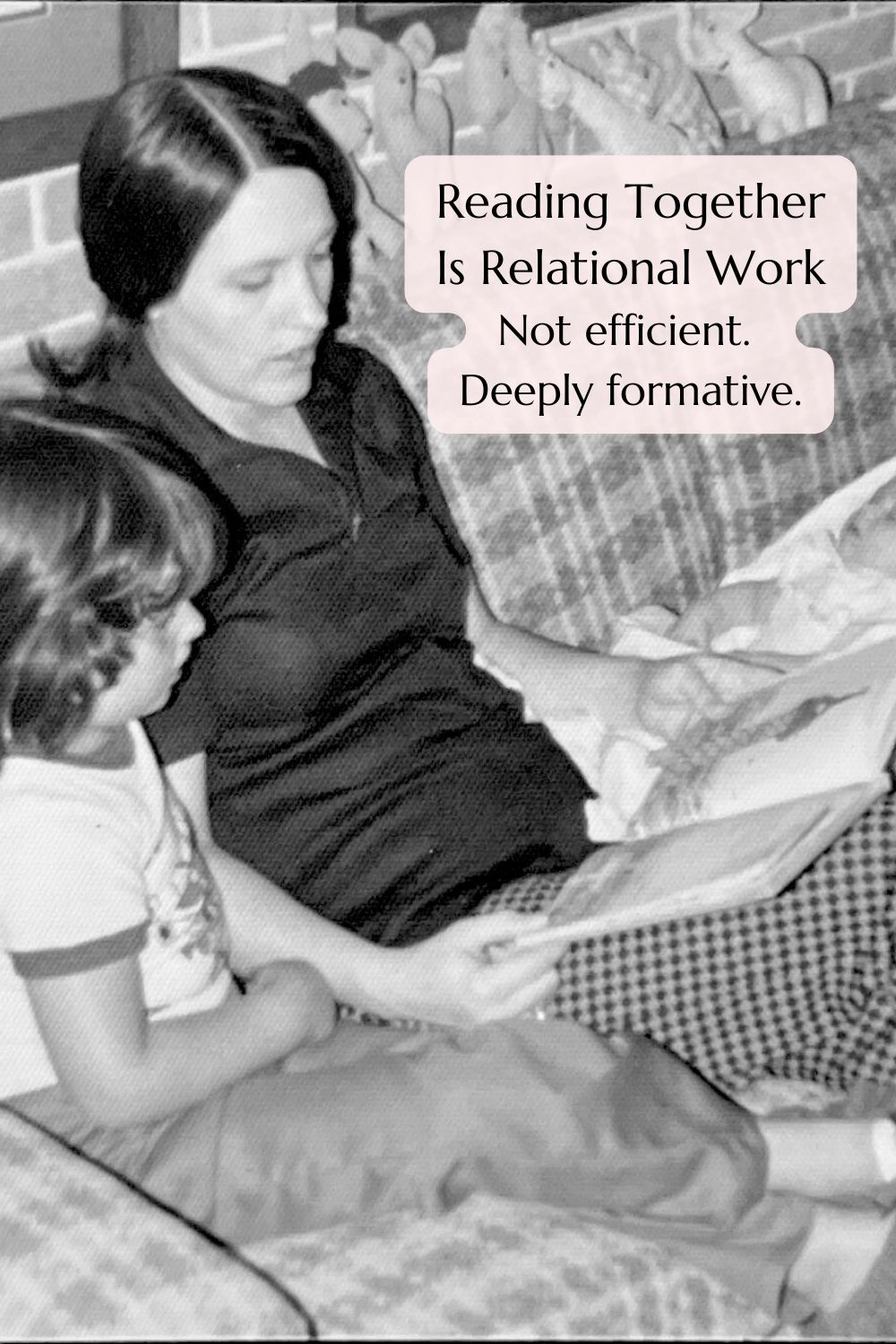
This is why reading together matters so much. Shared reading creates a relational space where imagination and empathy are formed in community. Children learn not only from the story itself, but from the presence of a trusted adult who lingers, wonders aloud, and refuses to rush to conclusions.
Teaching Emotions vs. Forming Hearts
There is a difference between teaching children about emotions and forming hearts that know how to respond wisely when emotions arise.
Teaching emotions often focuses on identification and regulation: naming feelings, managing responses, practicing strategies. These can be helpful tools. But tools alone do not shape character.
Stories form hearts by giving emotions meaning. They show us why fear matters, when anger is justified, how grief can coexist with hope, and what love requires when it costs something.
A child who has lived inside stories learns that emotions are not problems to be solved, but signals that point toward values, relationships, and responsibilities.
Moral Reasoning Without Moralizing
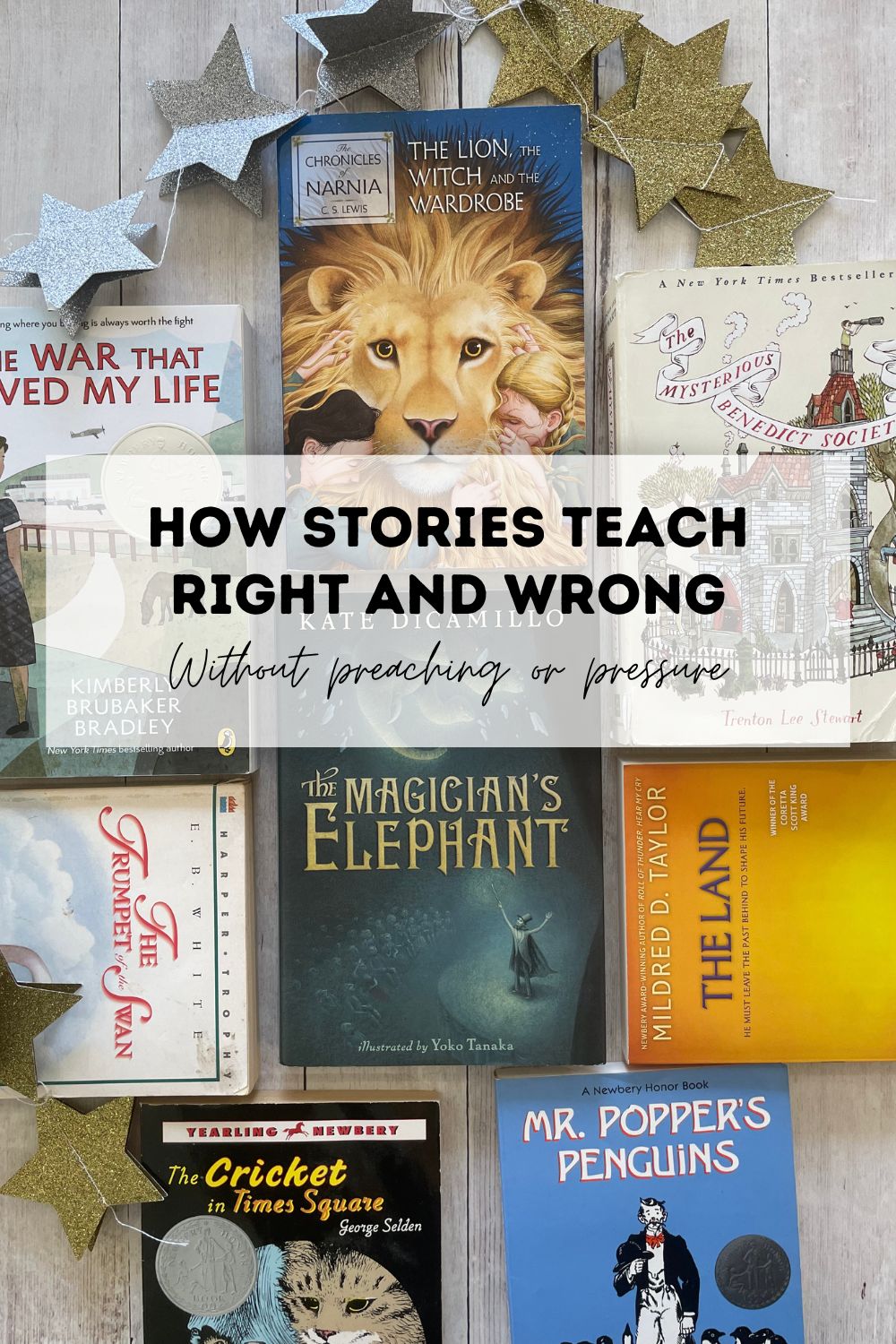
One of the great gifts of literature is that it allows children to develop moral reasoning without being preached at.
Instead of saying, Here is the lesson, stories invite children to:
- wrestle
- ask questions
- disagree with characters
- feel tension between competing goods
- notice consequences unfold over time.
This kind of moral formation is durable. It respects the child’s agency. It trains discernment rather than compliance.
When we read aloud and talk together—not to extract a moral, but to stay present to the story—we are modeling how thoughtful adults engage the world: with curiosity, humility, and attention.
Why This Matters for Thoughtful Parents
If you feel cautious about modern educational trends, this is not a retreat from formation—it is a return to it.
Reading stories together is not a soft alternative to “real” education. It is one of the oldest, wisest forms of discipleship we have. It shapes the inner life from which decisions, relationships, and convictions eventually flow.
This vision of education aligns beautifully with the classical understanding of formation found in works like Norms and Nobility—an education aimed not merely at producing capable students, but at cultivating humane, free, and responsible persons.
The Long View
Formation takes time. Its fruit is often invisible for years. But when children grow into adults who can listen well, love wisely, endure suffering with hope, and act courageously without needing applause, we begin to see what those quiet hours of shared reading were really doing.
We were not just teaching literacy.
We were shaping loves.
We were forming hearts.
We were preparing souls for the long work of living well.
If this vision resonates with you, you’re not behind—you’re paying attention. And you’re standing in a long tradition of parents and educators who believed that stories matter because people matter.
If you’d like practical help choosing stories that do this kind of formative work, you may enjoy exploring the Book Nook inside the Rooted Minds community—where we gather living books, conversation guides, and resources designed to support thoughtful, relational learning.

Betsy Strauss is an unexpected homeschooler, mother of three, who is in a relationship with a sweet man for life. She loves reading books, drinking coffee, and learning anything with her kids.